Specialized English for PhD in Artificial Intelligence ● The Grand Finale
Session 13: Final Presentations (Part 2) & Course Conclusion
Portfolios, Networking & The Road Ahead
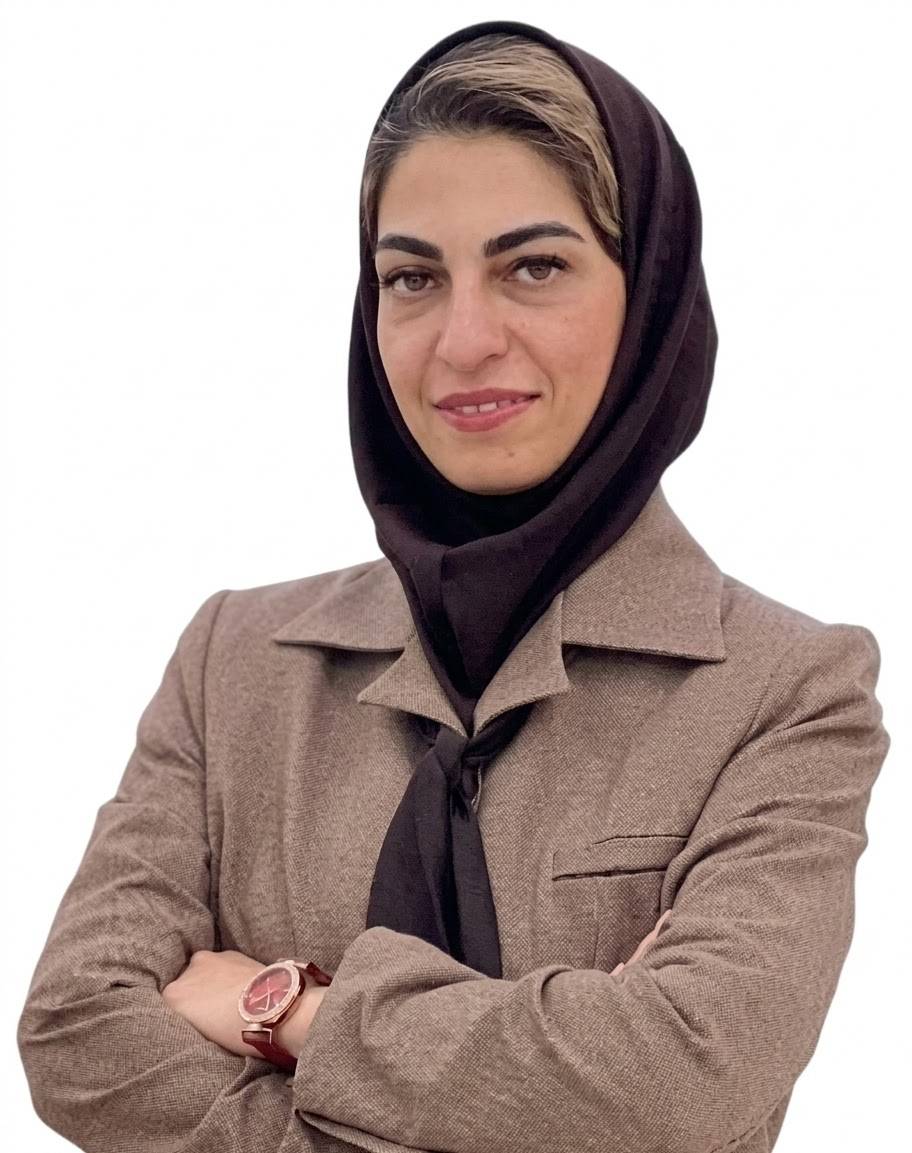
Dr. Maryam Hajiesmaeili
Head of Innovation Center at Refah Bank & Faculty Member at Islamic Azad University, Central Tehran Branch
LinkedIn Profile1. Welcome to the Grand Finale
- Welcome to Session 13! Over the past weeks, we have journeyed from understanding the basic IMRaD structure to mastering the nuances of AI literature and oral defense.
- Today is about Culmination. We will hear the final round of student presentations.
- More importantly, we will transition our focus from passing this course to building your global academic brand as a future PhD graduate.
- You are no longer just students; you are independent researchers entering the international AI community.
2. Final Presentations: Phase 2
- We will now resume the 15-Minute PhD Defenses for the remaining scholars in the class.
- Presenters: Remember your pacing, maintain eye contact (the Engagement Triangle), and do not read directly from the slides.
- Audience: Actively listen and prepare a constructive, academic question. Your peer feedback in the chat remains a critical part of your participation grade.
3. Refresher: The Art of the Q&A Panel
Before we begin, a quick reminder of the L.A.A.D. Framework for managing questions:
| Step | Action | Golden Phrase |
|---|---|---|
| Listen | Wait 1 full second after they finish. | (Silence & Eye Contact) |
| Acknowledge | Validate to buy thinking time. | "That is a very insightful point." |
| Answer | Direct, concise, scientific (under 45s). | "We specifically opted for X because..." |
| Deflect | Redirect out-of-scope questions safely. | "While outside our current scope, future work will..." |
4. The Final Portfolio Submission
- Your final grade depends on compiling everything we have learned into a professional Academic Portfolio.
- 1. The Overleaf Manuscript: Your Mock PhD Paper must include the Abstract (5 moves), Introduction (CARS model & Gap), and Results (objective data).
- 2. The Cover Letter: A 1-page PDF addressed to a specific Q1 Journal Editor, proving the "fit" of your paper.
- 3. The Presentation Deck: The 10-15 slides you used today, emphasizing visual design over dense text.
5. Beyond the Course: The AI Researcher's Journey
- Passing this English course is just the prerequisite. The real challenge is maintaining academic fluency in a fast-moving field.
- In AI, SOTA changes every 3 months. If you stop reading, your English and your technical knowledge will degrade rapidly.
- Daily Habit: Read the Abstract and Intro of at least one paper on arXiv (cs.AI / cs.CL) every single day.
- Surround yourself with English AI discourse: Listen to podcasts (e.g., Lex Fridman, Latent Space) and follow top researchers on Twitter/X.
6. Maintaining Academic Fluency (Tools)
Do not write alone. Leverage the modern AI researcher's toolkit:
| Tool | Primary Use Case |
|---|---|
| Overleaf | Standard collaborative LaTeX editor for writing formulas and managing BibTeX. |
| Semantic Scholar | AI-driven search engine. Use it to build citation graphs and find related work. |
| Writefull / Grammarly | Automated proofreading designed specifically for academic phrasing. |
| Claude / GPT-4 | Use them to critique your writing, not to generate it from scratch. |
7. Building Your Academic Brand
- In the digital age, if an international professor cannot find you online, you do not exist academically.
- Google Scholar: Set up a public profile immediately. Make sure your name is consistent across all papers.
- ORCID ID: A persistent digital identifier that distinguishes you from every other researcher. Add it to your CV.
- Twitter/X & LinkedIn: Twitter is the primary social network for AI researchers. When you publish a paper, write a clear, visual "Thread" summarizing your contributions.
8. The Open-Source Ethos in AI (GitHub)
- Harsh Reality: In modern AI research, a paper claiming SOTA results without releasing the code is often treated as a PR stunt, not science.
- Reviewers at NeurIPS/ICLR actively look for the GitHub link in the Abstract.
- The GitHub README: Your repository needs a professional README.md written in clear English.
- Include: Installation steps, how to run training, how to run evaluation, and a link to download pre-trained weights (HuggingFace).
- Clean code + clear English documentation = Citations.
9. Networking at International Conferences
- Conferences are not just for presenting; they are for networking. This is how you find Postdoc positions or industry jobs (Google, DeepMind).
- Do not be shy. Approach professors during coffee breaks or poster sessions.
- The Golden Rule: Never approach a professor and ask "Can you give me a job?"
- Instead, say: "Hi Prof. X, I really enjoyed your recent paper on Y. My own PhD research focuses on a related problem, specifically Z. I'd love your quick thoughts on..."
- To do this effectively, you need an Elevator Pitch.
10. The Academic "Elevator Pitch"
An Elevator Pitch is a 30-second summary of who you are and what you do. It must be memorized and delivered naturally.
- The Introduction: "Hi, I'm [Name], a final-year PhD candidate at [University]."
- The Problem (The Gap): "My research focuses on the computational bottleneck in multi-agent LLM systems."
- The Solution & Impact: "I recently developed a sub-quadratic verification framework that reduces latency by 3x without losing accuracy."
- The Hook: "I saw your lab is working on similar alignment issues..."
11. Professor's Final Reflections
- It has been a privilege to witness your growth over these 13 sessions.
- You transitioned from writing passive, generic sentences to crafting sharp, active, and SOTA-level academic prose.
- You learned that a PhD is not just about writing code; it is about communicating your ideas so clearly that the global community cannot ignore them.
- Do not let fear of grammar hold you back. Perfection is the enemy of publication. Write, review, refine, and submit!
12. Task-Based Workshop: The Elevator Pitch
Following our 70/30 active learning model, this is your final task.
- The Scenario: You are at the NeurIPS poster session. A famous researcher from DeepMind asks, "So, what are you working on?"
- Your Task: Draft your 30-second Elevator Pitch (approx. 40-60 words) in the Studio on the next slide.
- Requirements: State who you are, what specific problem you solve (the Gap), and the impact of your proposed method.
13. Live Interactive Studio: Elevator Pitch Drafter
Draft your 30-second Academic Pitch here.
- Hook: "I am a PhD student exploring..."
- Problem: "My research addresses the bottleneck of..."
- Impact: "I developed a framework that improves..."
⚡ Real-Time Pitch Analyzer
Awaiting Draft...
Word Count (30-60W):0 W
Self Intro (I am/My research):Pending
The Problem (Addresses/Solves):Pending
The Impact (Improves/Reduces):Pending
Copied! ✓
14. Final Farewell & Class Dismissed
Thank you for your hard work and dedication over this semester.
- Final Deliverable: Upload your completed Portfolio (Overleaf PDF, Cover Letter, Slide Deck) to the university portal by midnight tonight.
- Stay Connected: Connect with Dr. Hajiesmaeili and your peers on LinkedIn. The AI community is small, and your network is your net worth.
- Keep Publishing: I look forward to reading your papers in future NeurIPS and IEEE proceedings. Good luck!
Dr. Maryam Hajiesmaeili
1 / 14
Specialized English (PhD in AI)