Specialized English for PhD in Artificial Intelligence ● Task-Based PhD Workshop
Session 11: Academic Correspondence & Networking
Cover Letters, Sabbatical Emails & Professional Tone
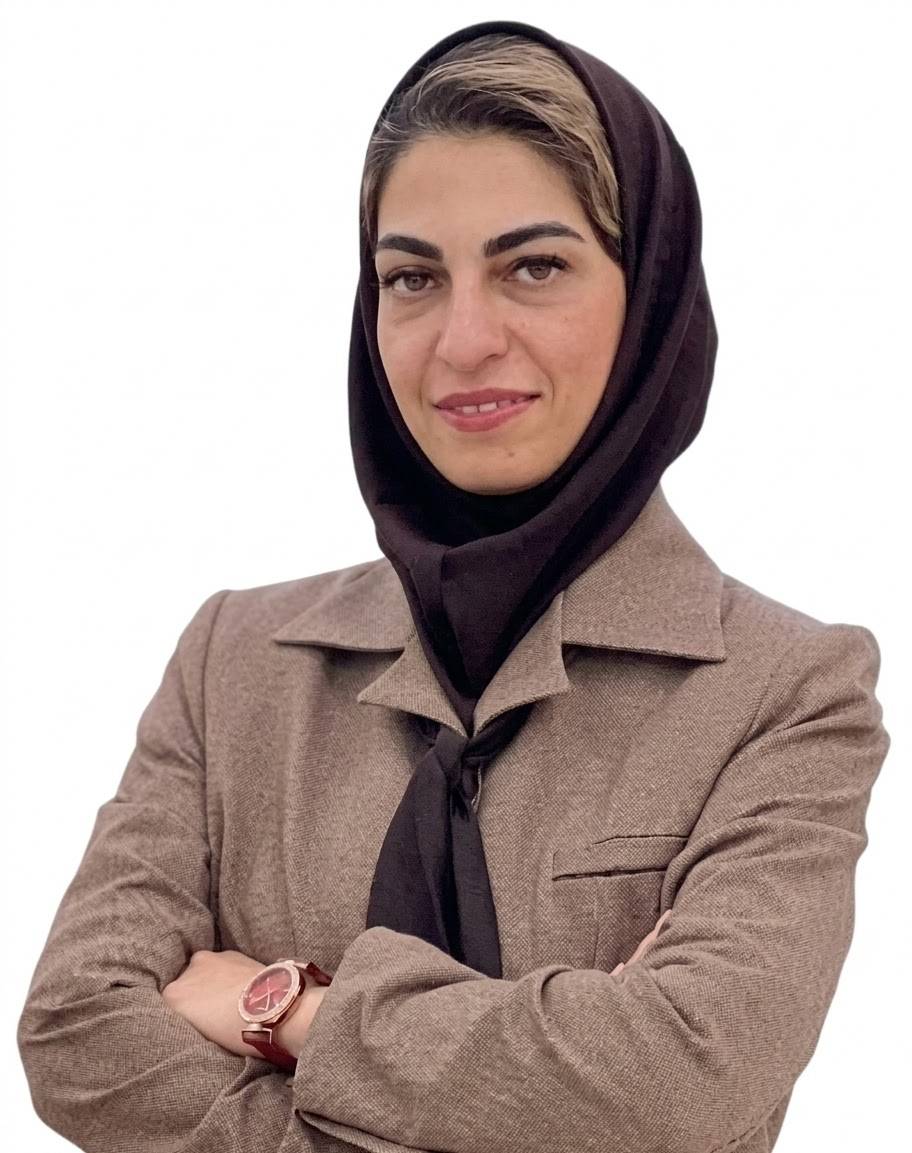
Dr. Maryam Hajiesmaeili
Head of Innovation Center at Refah Bank & Faculty Member at Islamic Azad University, Central Tehran Branch
LinkedIn Profile1. The Importance of Academic Correspondence
- We have mastered writing the paper and presenting it. However, the invisible work of a PhD involves high-stakes emails.
- Your Cover Letter determines if a Journal Editor sends your paper to reviewers or issues a "Desk Reject."
- Your Cold Emails determine if a top-tier professor will invite you for a Postdoc or Sabbatical (فرصت مطالعاتی).
- The Goal: Establish a professional, confident, and polite tone that proves you are a serious researcher.
2. The Journal Cover Letter
- When submitting to Q1 journals (e.g., IEEE T-PAMI, Springer), the submission portal requires a Cover Letter addressed to the Editor-in-Chief.
- What it is NOT: It is not a copy-paste of your Abstract.
- What it IS: A "Sales Pitch." The editor receives hundreds of papers a week. You must convince them in 30 seconds that your paper fits their journal and is novel enough to warrant peer review.
3. Structure of a Perfect Cover Letter
A professional Cover Letter consists of exactly 4 Paragraphs (around 1 page max):
- The Hook & Details: Editor's name, Manuscript Title, and Journal Name.
- The Core Contribution: What problem did you solve and what are the SOTA results? (No dense math).
- The Fit: Why is this journal the perfect home for this paper?
- Ethical Declarations: State that the work is original and not under review elsewhere.
4. Paragraph 1: The Hook & Details
- Rule #1: Do your research. Never write "Dear Editor." Find the actual name of the Editor-in-Chief on the journal's website.
- Template:
"Dear Prof. [Last Name],"
"Please find enclosed our manuscript entitled '[Paper Title]', which we are submitting for exclusive consideration of publication as a Research Article in [Journal Name]."
5. Paragraph 2: The Core Contribution
- Distill your abstract into 3 sentences. The editor is not an expert in your exact sub-niche, so avoid heavy jargon.
- State the Gap: "While current Agentic architectures excel at planning, they suffer from severe hallucination propagation."
- State the Solution: "To mitigate this, we propose a novel constitutional verification mechanism..."
- State the Metric: "Our extensive experiments demonstrate a 14% improvement over SOTA on the WebArena benchmark."
6. Paragraph 3: The Fit (Why this Journal?)
- Editors reject papers if they fall "outside the scope" of the journal. You must explicitly link your paper to the journal's audience.
- Template:
"We believe this manuscript is highly suitable for [Journal Name] because it aligns perfectly with the journal's scope of [Journal Topic, e.g., applied machine learning systems]." - "Furthermore, our findings will be of broad interest to the readership focusing on scalable AI alignment."
7. Paragraph 4: Ethical Declarations
Journals require explicit confirmation of academic integrity. Use this exact boilerplate:
| Declaration | Standard Phrasing |
|---|---|
| Originality | "This manuscript is original and has not been published elsewhere." |
| Not under review | "It is not currently under consideration by any other journal." |
| Author Agreement | "All authors have approved the manuscript and agree with its submission." |
| Sign-off | "Sincerely, / Yours faithfully, [Your Name & Affiliation]" |
8. Golden Rules of the Cover Letter
- Do NOT exaggerate: Say "Our method significantly improves..." rather than "We have solved AI alignment."
- Format: Use your university's official letterhead (Logo at the top) to look professional.
- Length: Keep it strictly to one page (approx. 300 words).
- Grammar: A typo in the Cover Letter tells the editor your paper is probably full of typos too. Use tools like Grammarly before sending.
9. Sabbatical & Postdoc Cold Emails
- As a PhD student, you may want to spend 6 months abroad as a Visiting Researcher (فرصت مطالعاتی). This requires sending "Cold Emails" to foreign professors.
- The Reality: Top AI professors receive 50+ cold emails a day. If your email is generic ("Dear Sir, I want to join your lab"), it will be deleted instantly.
- The Strategy: You must prove you have read their specific recent papers and that your skills (e.g., PyTorch, LLM fine-tuning) align with their current grants.
10. Structure of a Cold Email
- Subject Line: Must be specific. "Prospective Visiting Researcher (Fully Funded) - ML Alignment"
- The Connection: Mention a specific paper of theirs you read. "I recently read your NeurIPS paper on Constitutional AI..."
- Your Value Proposition: What can you do for them? "During my PhD, I developed a novel framework for..."
- Call to Action (CTA): Keep it low friction. "Would you be available for a brief 10-minute Zoom call next week?"
11. Case Study: Bad vs. Good Cold Email
Generic (Delete Instantly): "Dear Respected Sir, I am a PhD student in Iran. I want to join your famous lab. I have published many papers. Please read my CV attached and accept me. Yours sincerely."
Targeted (Gets Replies): "Dear Prof. X, I thoroughly enjoyed your recent paper on DPO at ICML. My current PhD research focuses on mitigating reward hacking in LLMs. I have secured full funding for a 6-month visiting researcher position and would love to contribute to your ongoing project on Constitutional AI. Would you be open to a 10-minute introductory call next week?"
12. Task-Based Workshop: Cover Letter Drafting
Following our 70/30 active learning model, it is your turn to write.
- The Scenario: You are submitting your PhD paper on a new Agentic AI framework to the IEEE Transactions on Pattern Analysis and Machine Intelligence (T-PAMI).
- Your Task: Draft the core of the Cover Letter in the Studio on the next slide.
- Requirements: Address the Editor, state your novel contribution (e.g., "we propose"), and justify the fit for the journal.
13. Live Interactive Studio: Cover Letter Drafter
Draft your Cover Letter here.
- Use "Dear Editor" or "Prof.".
- Include contribution verbs ("propose", "demonstrate").
- Include fit verbs ("fit", "scope", "audience").
⚡ Real-Time Letter Analyzer
Awaiting Draft...
Word Count (50-150W):0 W
Address (Dear Prof/Editor):Pending
Contribution (Propose/Novel):Pending
Journal Fit (Scope/Audience):Pending
Copied! ✓
14. Peer Review & Portfolio Assignment
To conclude our session on Academic Correspondence:
- Live Exchange: Share your drafted Cover Letter in the class chat. Did you sound confident but polite?
- Peer Critique: Did your partner explicitly state the journal's name and why the paper fits its scope?
- Assignment for Session 12: Add a completed Cover Letter to your Overleaf PhD draft project. Next session, we begin our final 15-Minute Oral Presentations!
Dr. Maryam Hajiesmaeili
1 / 14
Specialized English (PhD in AI)